
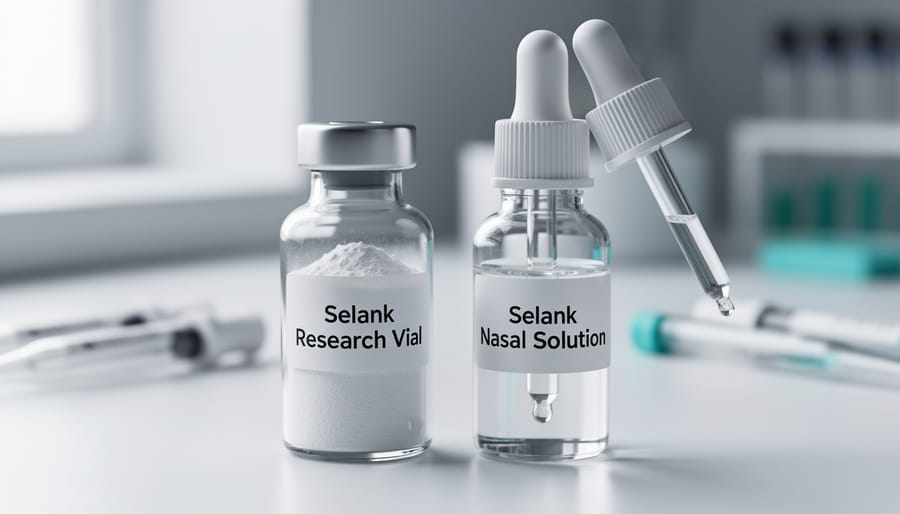
For most research workflows, lyophilized Selank wins on stability and storage, while the nasal format wins on convenience, since it arrives ready to use. The deciding factor is how much preparation your protocol can absorb. If you need a shelf-stable material you can reconstitute to an exact concentration, lyophilized is the safer pick. If you want a pre-prepared option with no mixing steps, https://kylopeptides.com/product/selank-nasal/ fits better.
This comparison is for sales professionals across Canada who need to explain these formats clearly to research customers. Knowing how each one is prepared, stored, and handled lets you set accurate expectations and stay on the right side of ethical selling. That means describing products for research use only, making no health or medical claims, and staying aware of Canadian regulatory requirements. Customers remember the rep who gave them straight answers, and so does the wider community you work in.
Below, you’ll find an at-a-glance table, plain-language definitions, a side-by-side comparison, and scenario-based guidance.
Nasal vs. Lyophilized Selank at a Glance
Here is the quick version before we dig into the details. The two formats solve different problems, and the table below shows where each one fits.
| Factor | Nasal Selank | Lyophilized Selank |
|---|---|---|
| Physical form | Pre-dissolved liquid in a spray or dropper bottle | Freeze-dried powder in a sealed vial |
| Preparation needed | None, supplied ready to use | Reconstitution by qualified researchers |
| Storage requirements | Typically cool, protected storage once supplied | Cold storage of the unopened vial; handle carefully after reconstitution |
| Stability | Generally shorter, as solutions degrade faster | Generally longer, since the dry powder holds up well |
| Ease of handling | Simple, with fewer steps and fewer chances for error | More steps, with more flexibility over concentration |
| Typical research context | Studies centred on the nasal route and convenience | Lab work needing long-term inventory and dosing control |
Exact storage and shelf-life figures vary by manufacturer, so always follow the supplier’s documentation for the specific product.
Verdict for nasal Selank: choose it when ready-to-use convenience matters more than long storage life.
Verdict for lyophilized Selank: choose it when stability, inventory planning, and control over preparation matter most.
Both are sold in Canada for laboratory research use only, and nothing here is medical advice.
What Each Selank Format Is
Nasal Selank: A Ready-to-Use Solution
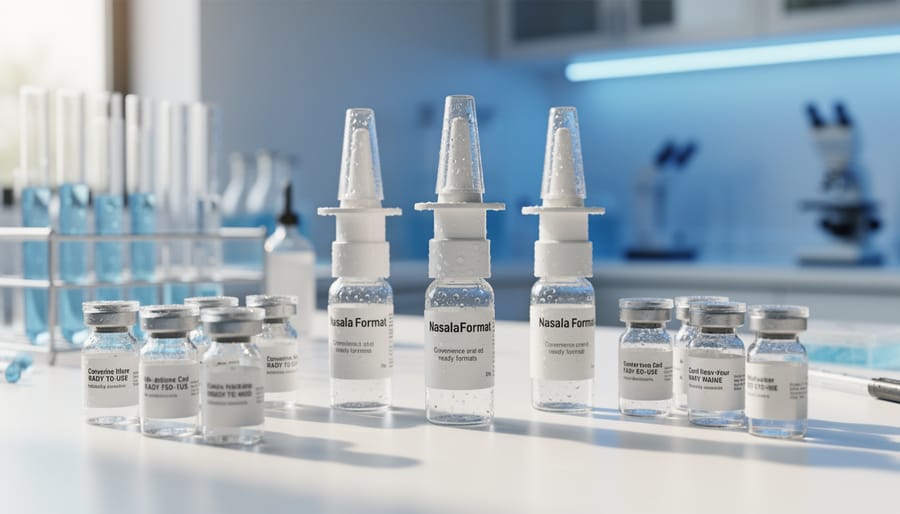
Nasal Selank comes as a pre-dissolved solution, typically packaged in a small vial or a metered spray bottle. The peptide is already in liquid form, so there’s no mixing step before it reaches the lab bench. That’s the core of its convenience appeal, and it’s why this format is so often linked with the route-of-administration work described in the published literature.
For anyone selling or sourcing it, a few terms come up again and again:
- Selank
- A synthetic peptide studied in laboratory research, offered in Canada for research use only.
- Peptide purity
- The percentage of the product that is the target peptide rather than impurities, usually confirmed by third-party testing.
- Certificate of analysis
- A lab document that reports a batch’s identity and purity results, and the first thing a careful buyer should ask to see.
The trade-off is that a solution generally has a shorter shelf life than a freeze-dried powder. So convenience tends to suit shorter-term, ready-to-go research needs rather than long-term stockpiling. Being upfront about that point builds trust with buyers.
Lyophilized Selank: The Freeze-Dried Powder
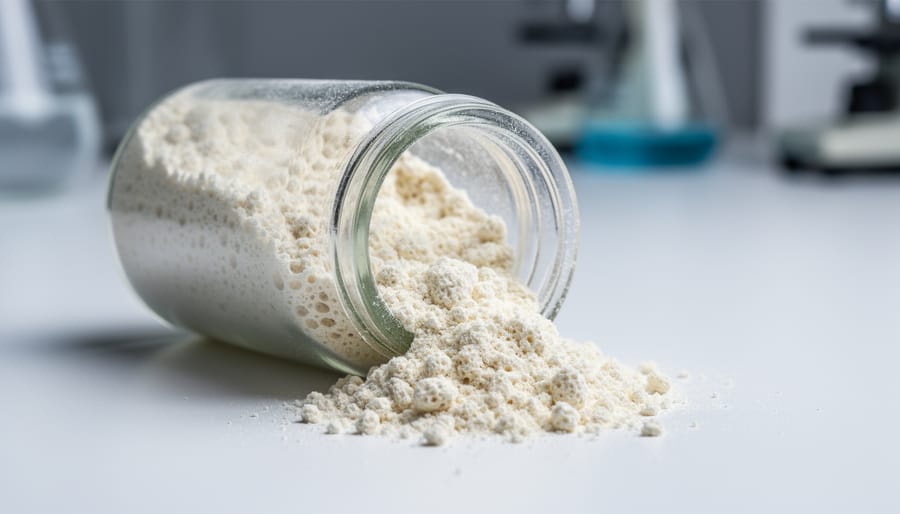
Lyophilization is a fancy word for freeze-drying. The peptide is dissolved in a solution, frozen, and then placed under a vacuum so the ice turns straight into vapour without ever melting. What’s left behind is a dry, lightweight solid, usually a small white or off-white cake or powder sitting at the bottom of a sealed vial.
Peptides are often supplied this way for a simple reason: water is their enemy over time. Removing it slows the chemical breakdown that can degrade a peptide in solution, which is why the powder generally holds up better in storage and during transit. For anyone managing inventory, that stability is the main selling point.
The trade-off is that the powder isn’t ready to use. It has to be reconstituted, meaning it’s dissolved in an appropriate solvent, by qualified researchers working with proper lab technique. That extra step gives flexibility over concentration, but it also adds handling and room for error. Selank in this form is sold for laboratory research use only.
Nasal vs. Lyophilized Selank, Dimension by Dimension
Stability and Shelf Life
Peptides in a dry state simply have fewer ways to break down. In solution, water is always present, and that opens the door to hydrolysis, oxidation, and microbial growth over time. Lyophilized peptides are more stable than their dissolved counterparts, which is why freeze-dried powder is the standard way to supply many research peptides.
For Selank, that gap shapes how each format fits an inventory plan. Lyophilized powder, kept cold, dry, and sealed, generally tolerates long-term storage far better. That makes it the safer pick if you’re stocking up or can’t predict how quickly material will be used.
Nasal solution is a different story. Once the peptide is already dissolved, its shelf life is shorter, and it’s more sensitive to heat and repeated handling. It suits short-term, near-term use, where the convenience outweighs the narrower window.
A practical tip for anyone advising buyers: always confirm the manufacturer’s stated storage conditions and expiry date for the specific product in hand. Honest shelf-life guidance builds trust far faster than overselling.
Preparation, Handling, and Dosing Control
A ready-made nasal solution removes most of the handling steps. It arrives at its working concentration, so there is no powder to dissolve and no diluent to measure. That convenience cuts down on the chance of a preparation error, which is the biggest practical advantage of the format.
Lyophilized powder trades that simplicity for control. Qualified researchers reconstitute it with a suitable diluent, which lets them choose the concentration for a specific protocol. But every added step is another place for something to go wrong. A miscalculated volume, a contaminated vial, or an unlabelled solution can compromise results, so proper lab technique isn’t optional.
Here’s what matters most in each case:
- Use sterile technique and clean equipment whenever a vial is opened or a solution is prepared.
- Measure diluent and volumes accurately, and double-check the concentration calculation.
- Label every prepared solution with the contents, concentration, and preparation date.
- Record each step so results can be traced and repeated.
- Follow the supplier’s storage guidance for the opened or reconstituted product.
For sales professionals, the takeaway is simple. Ready-to-use means less handling risk, while powder means more flexibility and more responsibility. Explaining that trade-off honestly, without overselling either format, builds the kind of trust buyers remember.

Storage, Shipping, and Supply Considerations
Logistics is where the format choice stops being theoretical. Lyophilized Selank is the easier product to move and hold. As a dry powder, it tolerates transit better and generally keeps longer when stored cold and protected from light and moisture. That makes it a sensible fit for suppliers who carry stock for weeks or months, or who ship across Canadian provinces where winter cold snaps and summer heat can both stress a package.
A nasal solution asks more of your supply chain. Peptides in liquid form are more temperature sensitive, so cold-chain handling, insulated packaging, and faster turnaround matter more. Shelf life is typically shorter, which means tighter inventory planning. Order smaller batches, rotate stock carefully, and check expiry dates before committing to large quantities.
Whichever format you handle, ask your supplier for their recommended storage conditions and shipping method in writing. Clear answers here protect product quality and build buyer trust.
Cost, Quality Verification, and Documentation
Format shapes cost in a few quiet ways. Lyophilized powder is usually cheaper per unit of peptide, since it ships compact and holds up longer on the shelf. Nasal solutions bundle in the diluent, the delivery device, and tighter handling needs, so the price per unit tends to run higher. Compare on a like-for-like basis, such as cost per milligram of peptide, not the sticker price alone.
Whatever the format, quality verification matters more than price. Ask for third-party testing and a batch-specific certificate of analysis (COA). A solid COA confirms identity and purity, ideally through HPLC and mass spectrometry, and ties the results to a specific lot number. Be wary of generic documents that could apply to any batch.
For sales professionals, this is where ethical practice shows up. Share documentation openly, describe products as research-use-only, and never stretch claims beyond what the paperwork supports. Buyers remember the people who made verification easy.
Which Selank Format Should You Choose?
There’s no single winner here, so the right pick depends on how your research setting actually runs. Start with your own workflow, then pressure-test it with suppliers. If you’re not sure how to frame those questions, a bit of effective market research into what your buyers truly need will save you guesswork.
- Choose nasal if you want a ready-to-use solution with no preparation steps.
- Choose nasal if your use is short-term and you’ll go through the supply quickly.
- Choose lyophilized if you plan to hold inventory for longer and need better storage stability.
- Choose lyophilized if your team has the lab technique and capacity to reconstitute powder correctly.
- Choose lyophilized if you want flexibility over how each batch is prepared.
- Choose either if the supplier provides a current third-party test and a certificate of analysis.
Before you commit, ask the supplier a few direct questions. What are the storage and shelf-life expectations for this exact format? Is there a certificate of analysis tied to the batch you’re buying? How is it shipped, and how is temperature managed in transit? Clear, specific answers are a good sign.
Remember that Selank is sold for laboratory research use only. Follow Health Canada rules and any applicable regulations, and keep your claims accurate and modest.
Selling and Sourcing Peptide Products Ethically
Selling research peptides well starts with the same principle that drives good selling everywhere: help the buyer understand what they’re actually getting. When you can explain the difference between a nasal solution and a lyophilized powder in plain terms, you’re educating rather than pitching.
That means sticking to facts about format, storage, and handling, and never implying health benefits. Products are for laboratory research use only, so leave out any suggestion about personal use or outcomes. Stay familiar with Health Canada’s rules, and when you’re unsure whether a statement is allowed, don’t make it.
A consultative selling approach fits this category well. Ask what the buyer’s research setting, storage capacity, and supply plan look like before suggesting a format. Then offer a clear email follow-up that links to the certificate of analysis and storage guidance, so they can verify everything themselves.
Have you handled a tricky product conversation like this? Share what you’ve learned with fellow consultants, managers, and trainers in our community.
Frequently Asked Questions About Nasal and Lyophilized Selank
Is one Selank format more stable than the other?
Lyophilized (freeze-dried) powder is generally more stable in storage than a pre-dissolved solution, because removing water slows the breakdown of the peptide. Nasal solutions usually have a shorter practical shelf life once prepared or opened.
Why does lyophilized Selank need reconstitution?
The powder has to be dissolved in an appropriate sterile diluent by qualified laboratory staff before it can be used in research. That extra step gives dosing flexibility, but it also adds a chance of preparation error.
How do I read a certificate of analysis?
Look for the batch or lot number, the stated purity (typically reported from HPLC testing), a mass spectrometry identity check, and the testing lab’s name and date. If any of those are missing or can’t be matched to the product you’re holding, ask the supplier for clarification.
Are the two formats interchangeable in research?
Not automatically. Concentration, preparation method, and delivery route can differ, so a study design built around one format shouldn’t assume the other will behave the same way.
None of this is medical advice. In Canada, Selank is sold for laboratory research use only, so anyone sourcing or selling it should stay within Health Canada rules and keep their claims accurate and documented.
Nasal Selank leans toward convenience, since it arrives ready to use and needs little handling. Lyophilized Selank leans toward stability and flexibility, holding up better in storage and giving researchers more control over preparation. Neither format wins outright. The right choice depends on your research setting, your handling capability, and your supply plan.
If you sell, source, or advise in this space, keep your claims accurate and your language grounded in research use only. Buyers remember the professionals who educated them instead of pressuring them. Keep learning, sell with integrity, and share what you’ve picked up with fellow consultants, managers, and trainers in the community.